
Both filter fans and negative air machines filter air. Both use HEPA or panel filtration to remove airborne particulates. But they work in opposite directions and solve opposite problems. A filter fan pushes filtered air into a space, creating positive pressure that prevents unfiltered air from entering through gaps, doors, or seams. A negative air machine pulls air out of a space through filtration, creating negative pressure that prevents contaminated air from escaping into adjacent areas. The choice between them is determined by a single question: is the hazard coming in, or going out? This guide explains when to use each, which industries require each, and how to identify the right product for a specific situation.
Understanding positive and negative pressure
Positive pressure means the space has more air being supplied than extracted. The higher internal pressure pushes air outward through any gaps, around door seals, through service penetrations, and through ventilation openings. This means contamination from outside cannot easily enter the space, because the outward airflow prevents it. A filter fan achieves positive pressure by supplying filtered air into a space at a higher rate than the space exhausts, so the filtered supply air becomes the dominant airflow direction.

Negative pressure means the space has more air being extracted than supplied. The lower internal pressure draws air inward through any gaps, with air flowing from the surrounding environment into the negative pressure space rather than out of it. This means contamination inside the space cannot easily escape to adjacent areas, because the inward airflow direction works against any outward migration of airborne hazards. A negative air machine achieves negative pressure by extracting air through HEPA filtration at a higher rate than fresh air is being introduced.
The practical test is simple. If you want contamination to stay out, you need positive pressure and a filter fan. If you want contamination to stay in, you need negative pressure and a negative air machine.
When to use a filter fan
Filter fans are appropriate when the threat is contamination entering a space from outside. Food production areas, pharmaceutical clean zones, electronics assembly rooms, and any environment where the product or process inside the space must be protected from airborne particulates are filter fan applications. The filter fan supplies filtered air, typically through panel filters, HEPA media, or a combination, and maintains the positive pressure differential that prevents unfiltered ambient air from infiltrating.
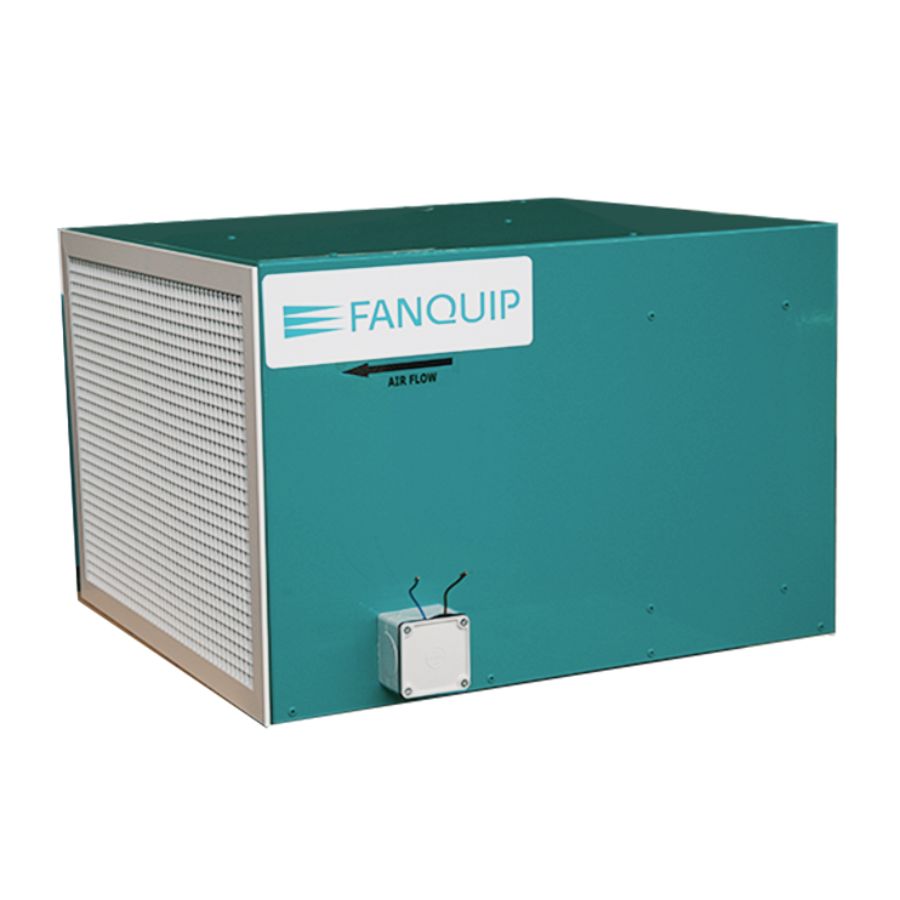
In food processing facilities, filter fans maintain positive pressure in packaging rooms, filling areas, and high-care zones to prevent airborne contamination from the general production environment from reaching the product. In pharmaceutical manufacturing, filter fans supply HEPA-filtered air into production areas and filling lines where particulate contamination of the product would cause batch failures. In electronics manufacturing, filter fans prevent dust from settling on sensitive components.
Filter fans are also appropriate as supplementary ambient air filtration in workshops and manufacturing areas where airborne dust levels are elevated. In this mode, the filter fan circulates and filters air within the space rather than maintaining strict pressure differentials, and the positive pressure effect is secondary to the filtration function. See industries where filter fans are specified for a fuller industry breakdown.
Browse the filter fan category.
When to use a negative air machine
Negative air machines are appropriate when the threat is contamination escaping from a space to adjacent areas. Asbestos removal, mould remediation, lead paint removal, and hazardous material handling all require negative pressure containment. The work area is sealed and a negative air machine extracts air through HEPA filtration, preventing contaminated air from migrating to surrounding spaces while workers are present inside.
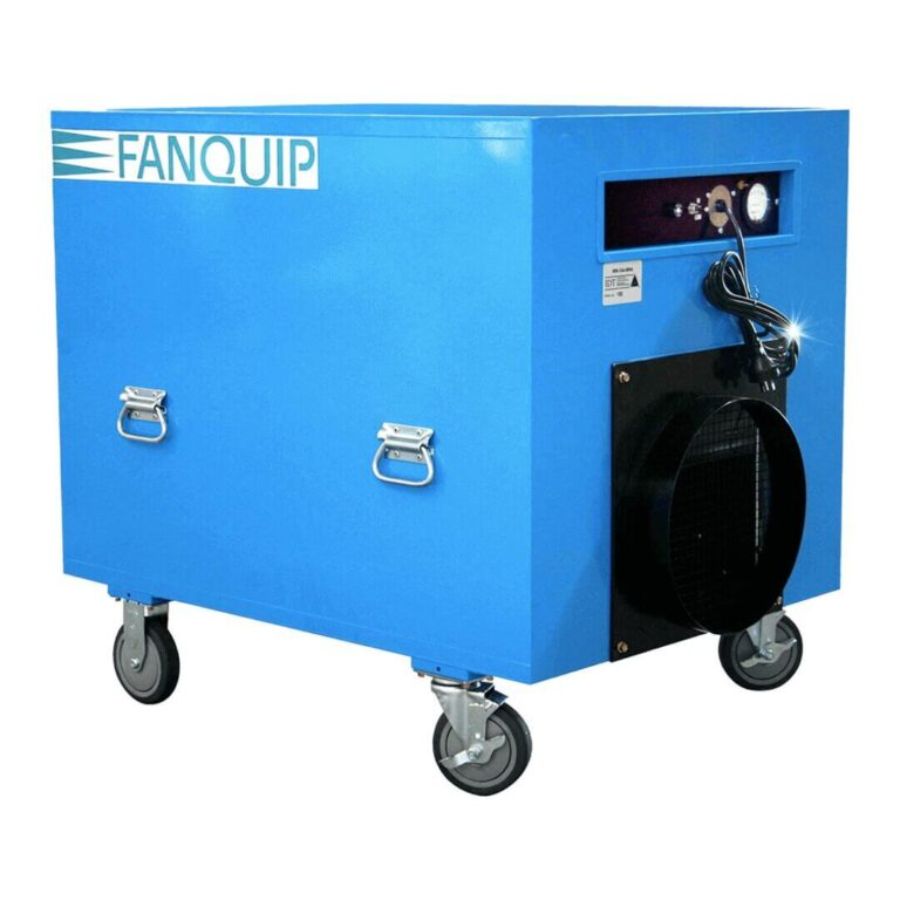
In building remediation, Australian asbestos regulations require that friable asbestos removal work areas be enclosed and under negative pressure relative to adjacent occupied areas. The negative air machine extracts air continuously through HEPA filtration, the extracted air passes through the filter before being discharged to the outside, and the negative pressure differential ensures any air leakage flows from the clean adjacent area into the work zone rather than from the contaminated zone outward. See negative air machine applications and operation for a fuller explanation, and negative air machines in sealed winter environments for cold-season containment considerations.
In pharmaceutical manufacturing, negative pressure isolators and containment suites are used for handling potent compounds, cytotoxic drugs, and other materials that must not escape into the adjacent manufacturing environment. The negative air machine maintains the containment function that protects workers and prevents cross-contamination of other products.
Using both in the same facility
Yes, and it is common. A pharmaceutical manufacturing facility may use filter fans to maintain positive pressure in a tablet production room, keeping contamination out, while simultaneously using a negative pressure containment suite for handling a potent active ingredient, keeping contamination in. A hospital may use positive pressure in immunocompromised patient rooms to protect patients from airborne infection, and negative pressure in isolation rooms for infectious patients to prevent pathogen escape.
In industrial facilities, filter fans and negative air machines can serve different zones of the same building simultaneously. What matters is that each zone’s pressure strategy matches the direction of the hazard for that specific area.
Quick selection guide
If contamination or unfiltered air must be kept out of a space, use a filter fan.
If contamination must be contained within a space and prevented from escaping, use a negative air machine.
If the primary need is ambient air quality improvement across a general production area without strict pressure management, a filter fan in recirculation mode provides particulate removal.
If the work involves hazardous materials removal, such as asbestos, mould, or lead, Australian regulations typically require negative pressure containment, so use a negative air machine.
If a space requires clean air supply for a process or product, such as food production, pharmaceutical filling, or electronics assembly, use a filter fan on the positive pressure supply.
If the situation is complex or involves multiple zones with different hazard directions, contact Fanquip’s team for a site-specific assessment. For adjacent decisions involving fume rather than particulate contamination, see how to choose the right fume extraction system, or for a broader orientation across Fanquip’s full product range, see industrial fan types explained.
Frequently Asked Questions
What is the difference between a filter fan and a negative air machine?
A filter fan pushes filtered air into a space, creating positive pressure that prevents unfiltered air from entering. A negative air machine extracts air through filtration, creating negative pressure that prevents contaminated air from escaping. The choice depends on the direction of the hazard. Filter fans protect a space from outside contamination, while negative air machines contain contamination inside a space.
Is a negative air machine required for asbestos removal in Australia?
Australian asbestos removal regulations, under Safe Work Australia’s Code of Practice: How to Safely Remove Asbestos, require that friable asbestos removal work areas be enclosed and maintained under negative pressure relative to adjacent areas. A negative air machine achieving negative pressure through HEPA filtration is the standard engineering control for meeting this requirement. Confirm the specific regulatory requirements with a licensed asbestos assessor for your jurisdiction.
Can a filter fan replace a negative air machine?
No. A filter fan and a negative air machine serve opposite pressure management functions. A filter fan creates positive pressure to keep contamination out. A negative air machine creates negative pressure to keep contamination in. Using a filter fan in a situation that requires negative pressure containment would create the opposite pressure effect, potentially allowing contaminated air to escape rather than be contained.
Where are filter fans used in food processing?
Filter fans are used in food processing to maintain positive pressure in high-care production zones, packaging rooms, and ready-to-eat product areas. The positive pressure differential prevents ambient air from the less-controlled general production environment from infiltrating the sensitive production area. FSANZ food safety standards require food businesses to take all practicable measures to prevent contamination, and filter fans are an engineering control that supports this obligation.
Do negative air machines use HEPA filters?
Fanquip’s negative air units use HEPA filtration. HEPA filtration is required for applications involving hazardous airborne particulates, including asbestos fibres, mould spores, and fine pharmaceutical compounds, where the extracted air must be treated before being discharged to the surrounding environment.
Get the right filtration solution for your situation
Browse Fanquip’s filtration range, or contact Fanquip’s team for a filtration assessment if your facility’s requirements are not a clean match for either product on its own.