
Loading docks are the biggest source of uncontrolled heat loss in most warehouses and food processing facilities. Every door cycle introduces a surge of cold air that your heating system then has to replace. In winter, that cost compounds quickly. This article covers the practical steps to reduce heat loss at the dock, improve energy efficiency, and maintain safe working conditions through the colder months.
Why Winter Increases Heat Loss and Energy Costs
A loading dock door left open for three minutes during a single docking cycle allows a significant volume of cold air to flood the facility. Multiply that by the number of docks, the number of cycles per shift, and the number of shifts per week, and the energy cost becomes substantial. Energy expenses can represent up to 30% of operational costs in warehouse and distribution facilities, and much of that is driven directly by dock-level air infiltration. For a broader look at keeping the whole facility warm through winter, see how to keep your warehouse warm, safe and productive in winter.

To understand your baseline, start by measuring door cycle counts per dock position across a typical shift. Calculate how long each door stands open and identify peak hours with the highest frequency of openings. This gives you a quantified starting point for prioritising upgrades and estimating return on investment before spending anything.
Inspect Dock Equipment and Dock Doors
Before investing in new equipment, inspect what you already have. Many facilities lose heat through deteriorated seals and doors that were adequate when installed but have degraded over years of use.
Work through each dock position systematically:
- Conduct a light test on dock doors by standing inside the facility with the external lighting on and the dock door closed. Visible light around the door perimeter indicates gaps that are allowing cold air infiltration.
- Examine dock doors for damaged weatherstripping, warped panels, and misaligned tracks that prevent a full seal when closed.
- Inspect dock seals and shelters for compression wear, torn fabric, and areas where the seal no longer makes consistent contact with trailers.
- Test dock leveler operation for smooth travel, correct lip extension, and seal contact with the trailer bed.
- Record all defects into a prioritised repair list, ranking by heat loss impact and frequency of use.
Seal the Gaps: Dock Seals and Shelters
Sealing the gap between the trailer and the dock opening is one of the highest-return actions available. Properly fitted dock seals and shelters can save up to $5,000 annually per dock position by preventing heat loss and maintaining a controlled internal climate.
Dock seals compress around the trailer body to form a tight perimeter seal. They are most effective for fleets with consistent trailer sizes. If seals are compressed flat or have hardened with age, they are no longer functioning and should be replaced immediately. During daily operations, workers should verify seal contact after each trailer docking to ensure the full perimeter is effectively engaged.
Dock shelters accommodate mixed fleets by providing a canopy and side curtains rather than a compressive seal. Evaluate whether your current shelter design is compatible with the range of trailer heights visiting your facility. Gaps at the top of the opening on taller trailers are a common source of significant heat loss.
Measure the trailer-to-dock gap at multiple trailer heights before specifying replacements. Schedule seal and shelter installation during low-traffic windows to minimise operational disruption.
Dock Levelers and Dock Leveler Seals
Dock levelers are a frequently overlooked source of cold air infiltration. The gap beneath and around a leveler in its stored position allows a continuous exchange of cold air at floor level, which is the zone where workers operate.
Inspect each leveler for:
- Smooth travel and correct lip extension onto the trailer bed
- Torn, hardened, or missing leveler seals around the pit perimeter
- Alignment issues that prevent full contact between the leveler lip and the trailer floor
Replacing worn leveler seals is a low-cost fix that delivers immediate improvement in floor-level temperature and reduces the load on dock heating systems.
Prevent Cold Air Infiltration with Air Curtains
Air curtains create a high-velocity air barrier across an open doorway, significantly reducing the volume of cold air that enters the facility during active docking operations. They are particularly effective at high-cycle docks where doors open frequently and stand open for extended periods.

Fanquip’s air curtains are designed for industrial doorways and provide a consistent air barrier that complements physical sealing solutions. Key installation and operational considerations:
- Install air curtains directly above the dock door opening, sized to match the full door width
- Set the air curtain runtime to activate when the door opens and continue until the door is fully closed
- Add brush seals to irregular door edges where physical sealing is inconsistent
Air curtains do not replace dock seals but work in combination with them, particularly during the gap between trailer arrival and full seal engagement.
Improve Energy Efficiency: HVLS Fans, Heater Fans, and Heat Loss Control
Even with well-sealed docks, some cold air infiltration is unavoidable during active operations. The goal shifts to managing that infiltration efficiently and ensuring the heat you generate reaches the workers on the dock floor rather than pooling at the ceiling.
Destratification with HVLS fans: Warm air rises and accumulates at the ceiling while workers at floor level remain cold. Installing HVLS fans to circulate ceiling-level warm air back down to the occupied zone can reduce heating costs by 20 to 30% annually. Set fan schedules to run during occupied shifts and measure the floor-to-ceiling temperature differential before and after installation to validate the improvement. For a detailed breakdown of cold spots and how to prevent them, see how to prevent cold spots in large warehouses. Track energy use monthly to confirm ongoing gains.

Zone heating with heater fans: Fanquip’s heater fans provide targeted heat delivery at dock level, warming the immediate work area without waiting for the entire facility to reach temperature. With output ranging from 7 kW to 36 kW, they can be positioned to direct heat toward the dock opening, counteracting cold air infiltration at the point where it enters. Available in wall-mounted and trolley configurations, they suit both fixed dock positions and flexible staging areas.
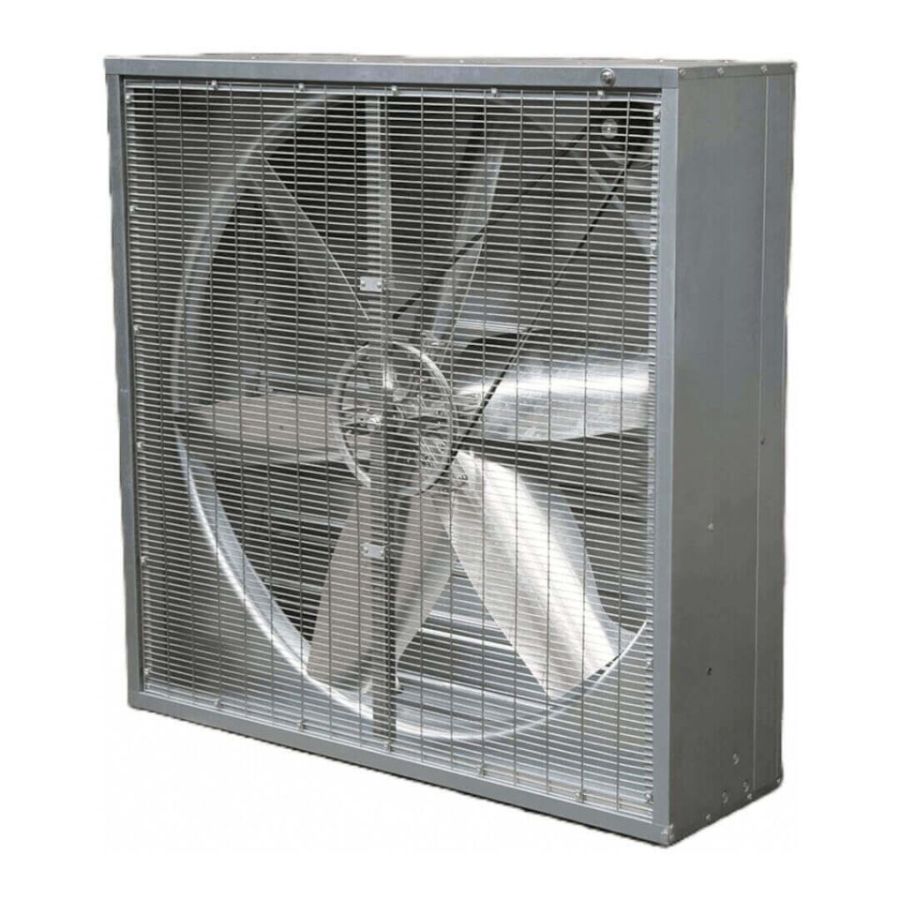
Exhaust management: Maintaining controlled air pressure inside the facility helps resist cold air infiltration at open dock doors. Fanquip’s end wall exhaust fans,side wall exhaust fans, and wall plate exhaust fans provide controlled extraction for fumes, moisture, and stale air without creating excessive negative pressure that draws in additional cold air. Position exhaust points away from active dock openings to avoid accelerating infiltration.
Operational Best Practices to Reduce Door Open Time
Equipment upgrades deliver the best results when combined with operational changes that reduce the time dock doors stand open.
- Implement timed dock appointment scheduling to prevent multiple simultaneous door openings across adjacent bays
- Deploy fast-actuating dock doors on the highest-cycle positions. High-speed doors open and close in seconds rather than the 15 to 30 seconds of a standard door, dramatically reducing cold air exposure per cycle
- Train staff on staged loading procedures that keep doors closed until the trailer is fully docked and sealed
- Monitor door-open durations weekly using door sensors or manual observation, and set targets for reduction over the winter season
Reducing door open time is the lowest-cost lever available. An operational improvement that cuts average door-open time by 30% delivers an immediate reduction in heat loss without any capital expenditure.
Dock Safety in Winter
Cold air infiltration creates physical hazards beyond energy waste. Ice, condensation, and moisture tracked in from trailers make dock approaches slippery. Freezing temperatures affect equipment response times and can cause seals to harden and crack mid-shift.
Key safety measures for winter dock operations:
- Apply non-slip floor coatings or anti-slip matting on dock approaches and staging areas where moisture is likely to accumulate
- Inspect dock lights at each position to ensure adequate illumination of trailer interiors, reducing the risk of trips and falls during loading
- Test vehicle restraints before the start of each shift to confirm secure engagement. Trailer creep is more likely in wet and icy conditions and can cause dangerous gaps to open during loading
- Hold a winter safety briefing with dock staff at the start of the season covering slip hazards, equipment checks, and emergency procedures
Regular maintenance on seals, doors, and restraints is essential during winter. Cold temperatures accelerate wear on rubber components and can cause metal parts to contract and misalign.
Implementation Roadmap and ROI
Not every dock position will deliver the same return on investment. Prioritise upgrades based on frequency of use and current condition.
| Upgrade | Estimated Annual Saving | Typical Payback |
| Dock seal or shelter replacement | Up to $5,000 per position | 1 to 2 years |
| Dock door weatherstripping | Up to $7,000 per door opening | Under 1 year |
| Air curtain installation | Varies by door cycle count | 1 to 3 years |
| HVLS fan installation | 20 to 30% reduction in heating costs | 2 to 4 years |
| Heater fan (zone heating) | Reduces central heating demand | 1 to 3 years |
Calculate the simple payback for each measure by dividing the installed cost by the estimated annual saving. Prioritise the highest-cycle bays first, as the saving per bay scales directly with door open time. Plan phased installation by ROI so the early stages fund the later ones.
Frequently Asked Questions
How much heat is lost through an unsealed loading dock door?
A single dock door with degraded seals can account for a significant portion of a facility’s winter heating demand. Improving dock door weather seals can save up to $7,000 annually per door opening by preventing cold air infiltration and reducing the load on the heating system.
Do air curtains work in very cold climates?
Yes, air curtains are effective in cold climates provided they are correctly sized for the door width and the air velocity is set appropriately for the external temperature differential. In extreme cold, combining an air curtain with a well-maintained dock seal delivers better results than either solution alone.
Can HVLS fans be used in loading dock areas?
Yes, but ceiling height and structural clearance at the dock need to be confirmed before specifying an HVLS unit. In facilities where ceiling height is insufficient for HVLS fans at the dock position specifically, wall-mounted heater fans and air circulators are the more practical solution for that zone.
What is the fastest way to reduce dock heat loss with minimal capital outlay?
Start with the light test across all dock doors to identify gaps, then replace worn weatherstripping and leveler seals. These are low-cost repairs that deliver immediate results. Combine with an operational review of door scheduling and staff procedures before committing to equipment upgrades.
Next Steps: Site Assessment and Performance Tracking
- Schedule a bay-by-bay winter dock assessment covering door condition, seal integrity, leveler operation, and current heating equipment.
- Create a KPI dashboard tracking door-open time per position, floor-to-ceiling temperature differential, and monthly energy consumption.
- Prioritise the highest-impact bays for immediate upgrades and pilot the solution before rolling out across all positions.
- Review results quarterly and adjust fan speeds, heater positioning, and door scheduling as operational patterns change through the season. For broader seasonal readiness across your ventilation system, see preparing industrial ventilation systems for seasonal change.
Fanquip supplies air curtains, heater fans, and industrial ventilation solutions suited to warehouse and food processing loading dock environments across Australia.
Contact our team to discuss your facility’s heat loss challenges and get a solution matched to your site conditions.