
Cold stress occurs when the body loses heat faster than it can produce it, causing core temperature to drop to a point where physical and mental function is impaired. In Australia, it is easy to underestimate this risk. Mild winters by global standards can still expose workers in refrigerated facilities, open construction sites, agricultural settings, and mining operations to conditions that cause real harm. Under Australian Work Health and Safety laws, employers have a duty to identify and control cold stress risks just as they would any other workplace hazard.
Cold Stress Hazards and Health Effects
Physiological Responses and Early Warning Signs
When the body is exposed to cold, it prioritises keeping the core warm by reducing blood flow to the extremities. Workers may notice shivering, numbness, and tingling in fingers and toes. These are early warning signs that should trigger immediate action: move to a warm shelter, add dry layers, and consume a warm non-alcoholic drink.

Cold also reduces dexterity and mental alertness before workers are aware it is happening. Cold muscles are more prone to sprains and strains. Impaired coordination increases the risk of slips, trips, and falls, particularly on frost-covered surfaces. Fatigue sets in faster, and cognitive errors become more likely. These effects make cold stress a direct contributor to workplace incidents beyond its immediate health impact.
Trench Foot and Frostbite
Trench foot develops when feet are exposed to wet, cold conditions for extended periods, even at temperatures above freezing. Blood vessels constrict, reducing circulation, and tissue begins to break down. Signs include redness, swelling, numbness, and blistering.
Frostbite occurs at or below freezing and causes the skin and underlying tissue to freeze. Affected areas appear hard, cold, and pale, progressing to blistering and potential tissue death if not treated promptly. Fingers, toes, ears, and the nose are most vulnerable. Any suspected frostbite requires immediate medical attention.
Hypothermia
Hypothermia occurs when body temperature drops below 35°C. It progresses in stages:
- Mild (32°C to 35°C): Uncontrollable shivering, clumsiness, slurred speech
- Moderate (28°C to 32°C): Confusion, drowsiness, irrational behaviour, shivering may stop
- Severe (below 28°C): Loss of consciousness, cardiac risk
If hypothermia is suspected, move the worker to a warm shelter immediately, remove wet clothing, replace with dry layers, and call for emergency medical assistance. Do not rub limbs or give alcohol.
Long-Term Effects of Cold Exposure
Prolonged occupational cold exposure is linked to chronic conditions including arthritis, rheumatism, bronchitis, and cardiovascular disease. Workers with regular cold exposure should have access to periodic health monitoring, and any worker who has experienced a cold stress incident should be referred for medical follow-up. For a broader overview of winter safety risks across industrial settings, see winter safety hazards in manufacturing.
Cold Environments and Workplace Contexts
Typical Australian Cold Workplaces
Cold stress is a real and manageable risk across a wide range of Australian industries:
- Warehousing and food processing: Cold rooms, freezer storage, and refrigerated distribution centres expose workers to sustained low temperatures throughout the year, not just in winter. For practical strategies specific to warehouse environments, see how to keep your warehouse warm, safe and productive in winter.
- Building and construction: Outdoor workers face wind chill, wet conditions, and early morning cold during the southern Australian winter
- Agriculture: Pre-dawn starts, exposed conditions, and wet weather create cold stress risk across much of regional Australia
- Mining and metals: Underground and high-altitude sites can experience extreme cold, particularly overnight and in southern and alpine regions
Seasonal Considerations
Sudden drops in temperature at the start of winter catch many facilities without adequate controls in place. Seasonal planning checkpoints should include a review of heating equipment, PPE stocks, rest shelter availability, and worker training before the cold season begins. Workers new to cold environments need additional acclimatisation time and closer supervision in the first two weeks of exposure.
Confined Spaces and Cold
Plant rooms, ceiling spaces, and underground access areas present a specific combination of cold and poor air quality. Ventilation is necessary for safety and gas hazard control in confined spaces, but exhaust-based systems create negative pressure that pulls in additional cold ambient air and increases wind chill on the worker inside. Where ventilation is required, use controlled, low-volume extraction such as Fanquip’s wall plate exhaust fans or side wall exhaust fans for air quality management, and pair with a directed heat source to offset the cold air draw. Access controls and worker check-in intervals are essential in confined cold spaces where a worker showing hypothermia symptoms may not be immediately visible.
Assessing Cold Stress Risk
Environmental Risk Factors
Wind chill significantly increases the rate of heat loss from exposed skin. A temperature of 5°C with a 30 km/h wind feels equivalent to approximately minus 3°C on exposed skin. Measure both ambient temperature and wind speed when assessing cold risk, and factor in wet conditions, which accelerate heat loss further.
Cold risk assessments should be triggered when ambient temperatures drop below 15°C for sedentary work, or below 10°C for any outdoor or semi-exposed work, with wind chill factored in.
Personal Risk Factors
Some workers face higher cold stress risk than others. Factors that increase susceptibility include:
- Cardiovascular conditions or poor circulation
- Diabetes or Raynaud’s disease
- Recent illness or fatigue
- Certain medications that affect circulation or thermoregulation
- Low body mass or poor physical conditioning
Assess clothing adequacy and hydration status as part of any pre-shift check in cold environments. Dehydration impairs the body’s ability to regulate temperature even in cold conditions.
Exposure Duration and Work Intensity
High-intensity physical work generates body heat but also causes sweating, which dramatically increases heat loss when activity slows. Assess both the active and rest phases of each task. As a practical guide, limit continuous cold exposure to 45 to 60 minutes before a mandatory warm-up break for moderate-intensity work in conditions below 10°C.
Implement job rotation to spread cold exposure across the team and reduce cumulative individual exposure. Log exposure times and monitor workers throughout the shift, not only at the start.
Prevention and Control Measures
Engineering and Administrative Controls
The most effective cold stress controls reduce exposure before it reaches the worker:
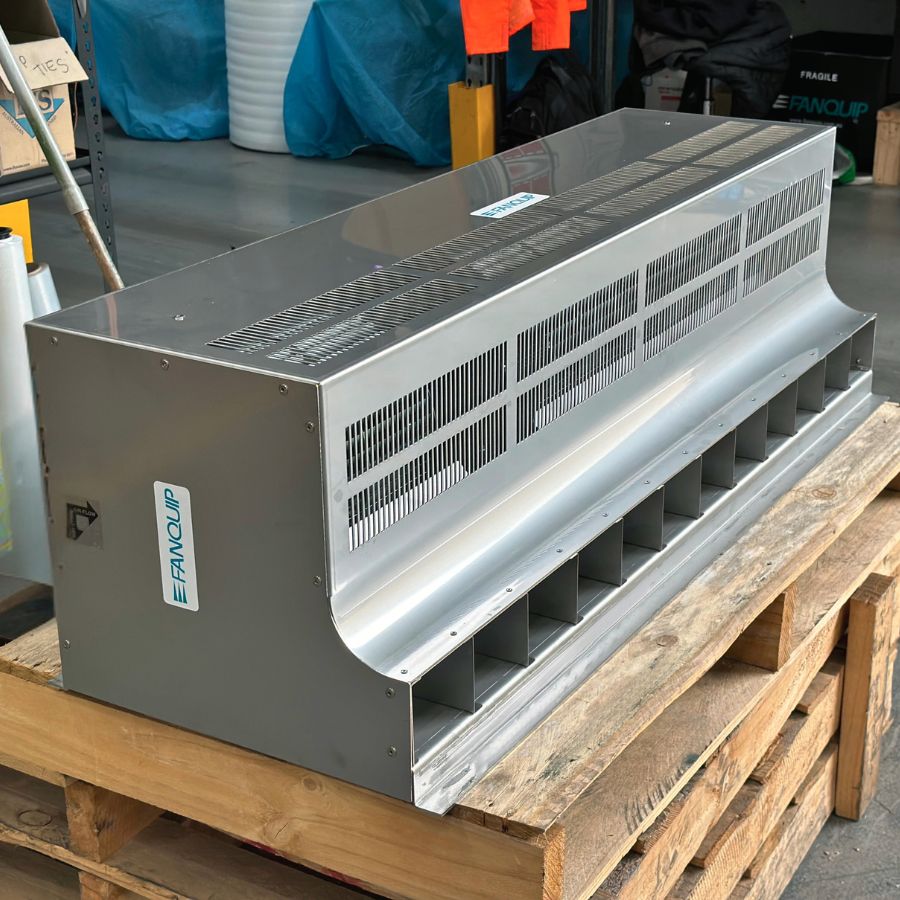
- Provide heated rest shelters within reasonable walking distance of cold work areas. Fanquip’s industrial heater fans from 7 kW to 36 kW are well suited to heating site shelters, welfare facilities, and staging areas quickly and efficiently
- Install air curtains at entry points to refrigerated facilities and cold rooms to reduce the volume of cold air workers pass through during each entry and exit. For loading dock environments specifically, see heating your loading dock in winter for a full breakdown of dock-level cold control measures.
- Schedule cold-intensive tasks during the warmest part of the day where operationally feasible
- Redesign tasks to reduce time spent stationary in cold zones
Clothing and PPE
A three-layer approach provides the best protection:
- Base layer: Moisture-wicking thermal underwear to keep sweat away from skin
- Mid layer: Insulating fleece or wool to retain body heat
- Outer layer: Windproof and waterproof shell to block wind chill and wet conditions
Significant heat loss occurs through the head. Insulated hats or helmet liners should be treated as mandatory PPE in cold environments, not optional. Gloves must balance insulation with sufficient dexterity for the task. Where fine motor work is required, consider thin liner gloves under heavier outer gloves that can be removed briefly.
Footwear must be insulated, water-resistant, and fitted with anti-slip soles. Boots that are too tight restrict circulation and accelerate cold injury. Enforce dry-sock protocols: workers should carry spare socks and change during longer shifts in wet conditions. Schedule regular boot and sock inspections as part of the shift routine.
Training and Supervision
Train all workers to recognise early cold stress signs in themselves and their colleagues. Shivering, slurred speech, confusion, and unusual clumsiness in a co-worker are grounds for immediate intervention. Assign supervisors to actively monitor vulnerable workers rather than waiting for self-reporting. Implement buddy systems for remote, isolated, or confined space cold work. Establish check-in intervals and a clear escalation process if a worker fails to check in.
First Aid for Cold Incidents
- Move the affected worker to a warm, sheltered area immediately
- Remove wet clothing and replace with dry layers or a thermal blanket
- Give warm non-alcoholic fluids if the worker is conscious and able to swallow
- Do not rub or massage affected limbs
- For suspected hypothermia or frostbite, call emergency services and do not delay transport to medical care
Cold Stress vs. Heat Stress
Australian workplaces often need to manage both risks depending on the season and work environment. The physiological responses differ significantly: heat stress causes the body to overheat and sweat excessively, while cold stress causes the body to conserve core heat at the expense of the extremities. Monitoring metrics differ too: for heat stress, track wet bulb globe temperature (WBGT) and fluid intake; for cold stress, track ambient temperature, wind chill, and exposure duration.
Ensure workers and supervisors receive training specific to each risk. A worker trained only in heat stress recognition may miss early cold stress symptoms entirely, and vice versa. Where facilities transition between hot and cold environments in a single shift, such as food processing workers moving between production floors and cool rooms, controls for both risks must be in place simultaneously.
Regulations and Guidance
Safe Work Australia’s guidance on managing the work environment provides the national framework for cold stress risk management. Key obligations include:
- Conducting a risk assessment when workers are exposed to cold environments
- Implementing controls in line with the hierarchy of controls
- Providing appropriate PPE and ensuring workers are trained in its use
- Reviewing controls after any cold stress incident
State and territory regulators (WorkSafe Victoria, SafeWork NSW, WorkSafe Queensland, and equivalents) may have additional local obligations or codes of practice. Consult your relevant regulator for jurisdiction-specific requirements.
Templates for cold stress risk assessments and further guidance are available through the Safe Work Australia website.
Frequently Asked Questions
At what temperature does cold stress become a workplace risk in Australia?
Cold stress risk begins below 15°C for sedentary or light work, and below 10°C for active outdoor work, particularly when wind chill and wet conditions are factored in. Cold rooms and refrigerated facilities present risk at any ambient temperature below 10°C regardless of outdoor conditions.
Is cold stress covered under Australian WHS law?
Yes. Under the model Work Health and Safety Act, employers have a primary duty to ensure the health, safety, and welfare of workers. This includes identifying and managing cold stress risks. Failure to do so can result in enforcement action from state and territory regulators.
How is trench foot different from frostbite?
Trench foot develops in wet, cold conditions above freezing through prolonged exposure, while frostbite requires temperatures at or below freezing and causes actual freezing of tissue. Both are preventable with correct footwear, dry-sock protocols, and adequate warm-up breaks.
Next Steps
Fanquip supplies industrial heating and ventilation solutions to warehouses, food processing facilities, construction sites, and mining operations across Australia. From industrial heater fans for welfare shelters and staging areas to air curtains for refrigerated entry points, our range supports the engineering controls that reduce cold stress exposure at the source. Contact our team to discuss the right solution for your site conditions.